An IP Rating, or ingress protection rating, is how we classify an electrical product’s enclosure level of protection from external objects and liquids, such as dust and water.
What does an IP Rating mean?
A light fitting is given an IP rating – like IP65.
The first digit represents the protection of the luminaire against solid objects and ranges from a score of 0 to 6. The second digit represents protection against liquids and can be scored from 0-8. This means the highest an IP rating can be is IP68.
Below are two images that showcase the difference between each score for both protection against solid objects and liquids.
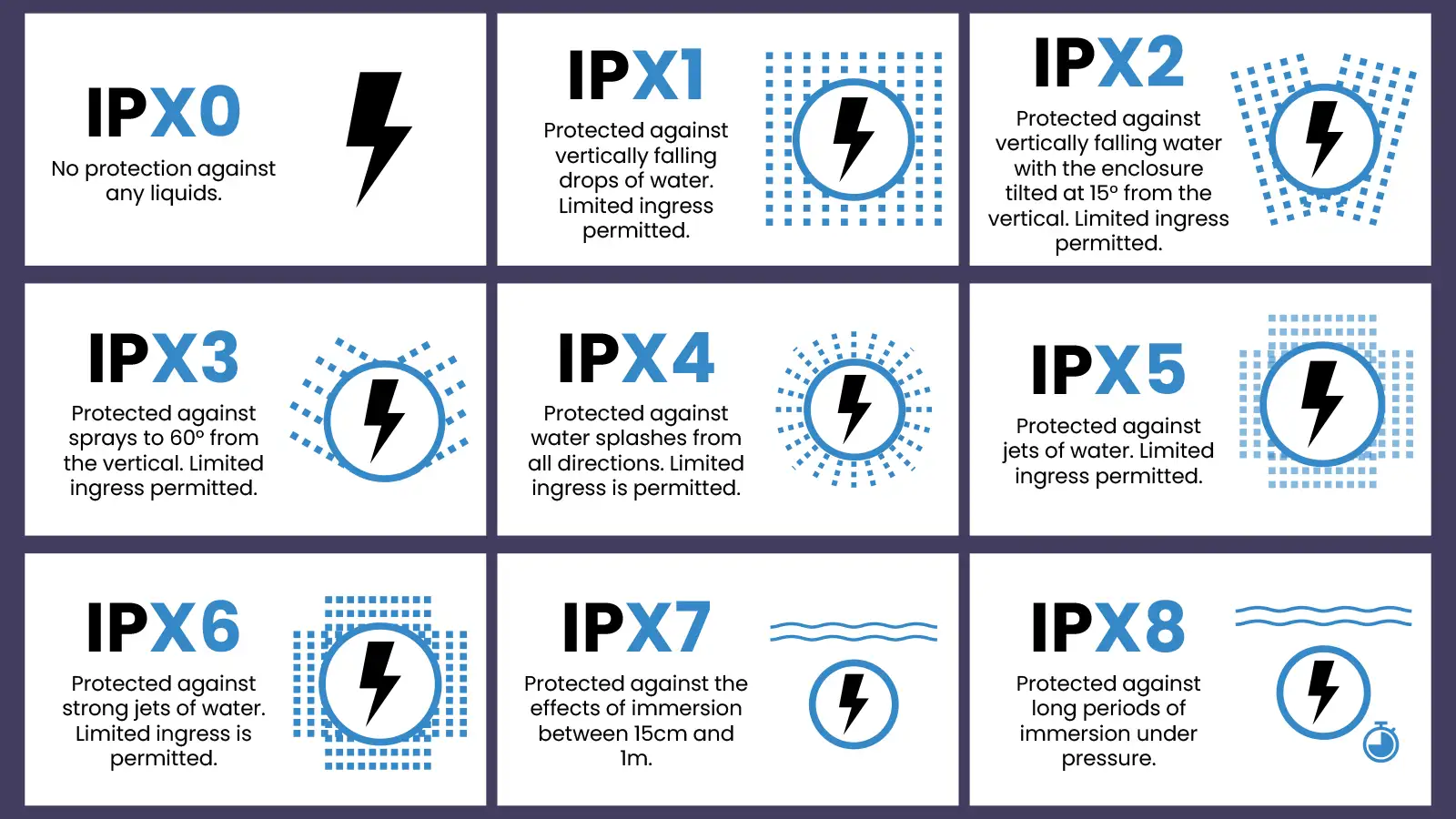
IPX0: No protection at all
IPX1: Protected against the vertical falling of water. Limited ingress is permitted.
IPX2: Protected against vertically falling water with the enclosure tilted up to 15° from the vertical. Limited ingress permitted.
IPX3: Protected against sprays to 60° from the vertical. Limited ingress permitted
IPX4: Protection against water splashed from all directions (360°). Limited ingress is permitted.
IPX5: Protected against low pressure jets of water. Limited ingress permitted.
IPX6: Protected against higher pressure jets. Limited ingress permitted.
IPX7: Protection against the effects of temporary immersion in water (between 15cm to 1m).
IPX8: Protected against long periods of continuous immersion in water under pressure.
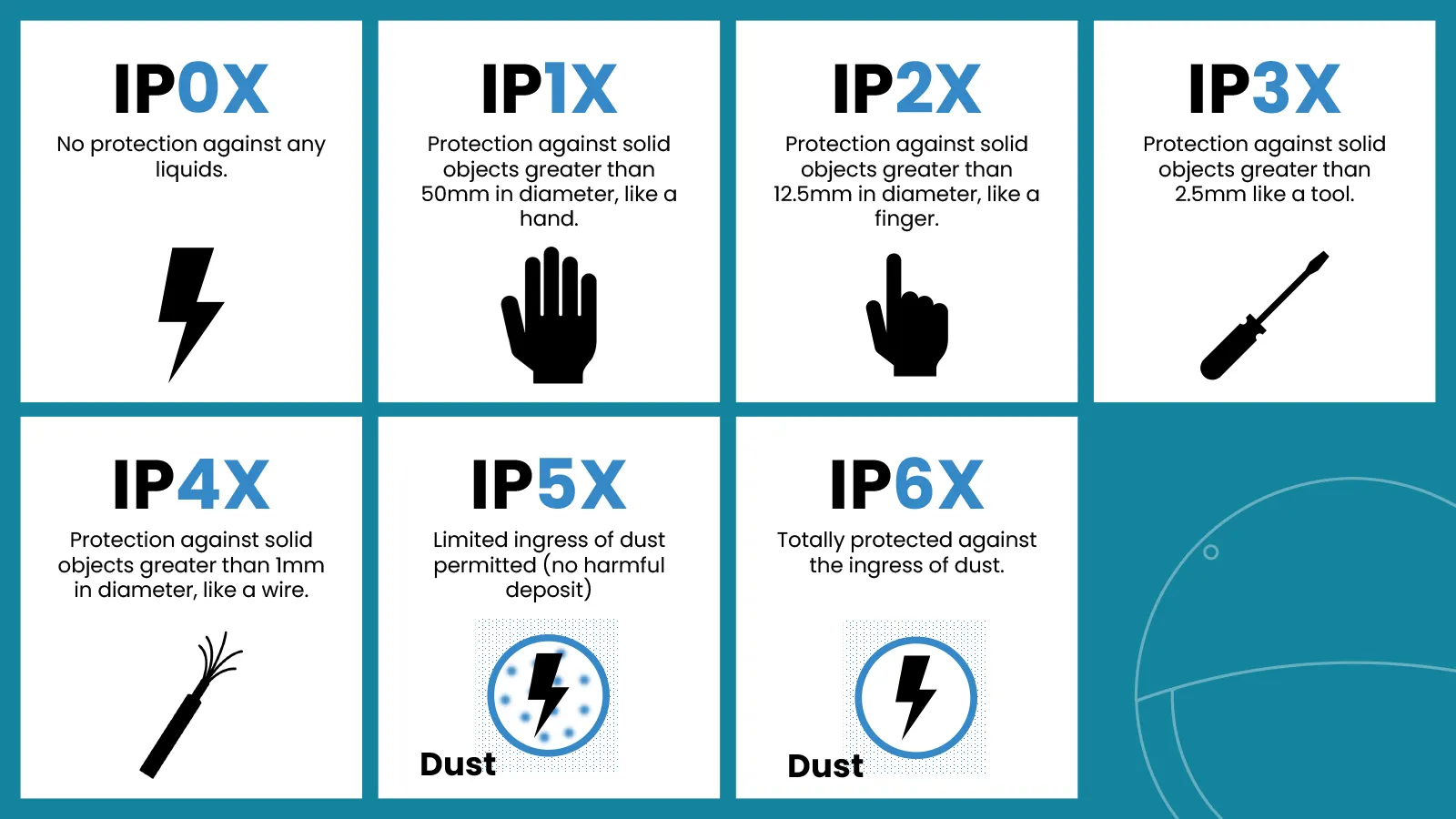
IP0X: No protection at all
IP1X: Full penetration of a 50mm diameter sphere not allowed and contact with hazardous parts is not permitted, like an entire hand.
IP2X: Full penetration of 12.5mm diameter sphere not allowed. The jointed test finger shall have adequate clearance from hazardous part. This could be a finger.
IP3X: The access probe of 2.5mm diameter shall not penetrate, such as a screwdriver
IP4X: The access probe of 1mm diameter shall not penetrate. This can be something like a wire.
IP5X: A limited ingress of dust is permitted (no harmful deposit)
IP6X: Total protection against the ingress of dust.
What IP Rating is Best?
There is no one real answer as to what IP rating as best, as different applications require different base levels to prevent failure. There is no harm in choosing a light fitting with an IP rating above than is required, but manufacturing costs for luminaires with higher IP ratings is tougher, so may incur higher costs.
This could mean that you may be overspending on your fittings. It’s more important to understand what IP rating you require, and install in smart, safe locations.
If you’re unsure how to approach this, we have a team of lighting designers who are happy to help start your project with you.
IP Ratings in Bathrooms
Bathroom spaces are often a common place to question ingress protections due to the presence of water and protecting ourselves and lights. Notoriously, water and electricity don’t mix well. Ultimately, the zone of the bathroom will determine what the minimum requirements are for use.
If you want to look bathroom zones in more detail, check this out.
In short however, there are four zones. Each has a minimum IP rating required:
Zone 0: In the bath or shower trays. For Zone 0 areas, you would need a light fitting with a minimum rating of IP67, as this is the location that will require the most protection from water ingress.
Zone 1: Above the bath or the shower tray (still in the shower). For Zone 1 areas, a light with IP65 rating is recommended, much like our Orba bulkhead or FIRELEDPCS downlight. They are safe enough to be in the splash zone of water, as they will not be submerged for any length of time.
Zone 2: Just outside the bath or shower (within 60cm), and around the sink. A score of IP44 is required. They are safe to receive some water splashes, providing you like to keep your water in your shower or bath. A perfect example is our LED Mirror, which is rated IP44.
Zone 3: Any area that might exist outside of this. This may include ceilings or walls that are not close enough to your shower, sink or bath. There is actually no rating required but it’s worth playing smart and safe.

IP Ratings for Outdoor Lights
Outdoor use is also an important factor when choosing an IP rating – weather can play a large role in which to choose. An IP44 rating is safe minimum for any exterior lighting – that includes outdoor spaces such multi-story car parks. This should be enough to keep the light working and safe even in the rain.
For locations at higher risk of ingress – such as overlooking the ocean or installed in a car wash, consider a product with a higher IP rating.